A Smaller Wardrobe: Everyday Outfits With Cotton and Linen Basics
Published September 19, 2026
You do not need a full closet to dress well. How cotton and linen basics - tees, shirts, trousers, and light layers - can cover most ordinary days.
Many closets are full, yet mornings still feel like there is nothing to wear. The problem is often not quantity - it is how few pieces work together.
A smaller wardrobe leans on a few reliable basics that mix easily. Cotton and linen suit that job: simple texture, comfortable for daily wear, and familiar enough to combine without fighting each other.
Below is a five-piece starting point - a guide, not a rigid uniform. Adjust for climate, work dress codes, and what you already own.
Why cotton and linen work as basics
- Easy to combine: quiet texture pairs with most everyday bottoms and layers.
- Built for repetition: with ordinary care, many pieces stay in rotation for years - not forever, but longer than disposable fashion assumes.
- Slow to date: a white tee or linen shirt does not depend on a single micro-trend.
- Comfort first: breathability and moisture handling matter on ordinary days.
- They settle in: many cotton and linen pieces soften with wear - see our break-in article for more.
Five core pieces
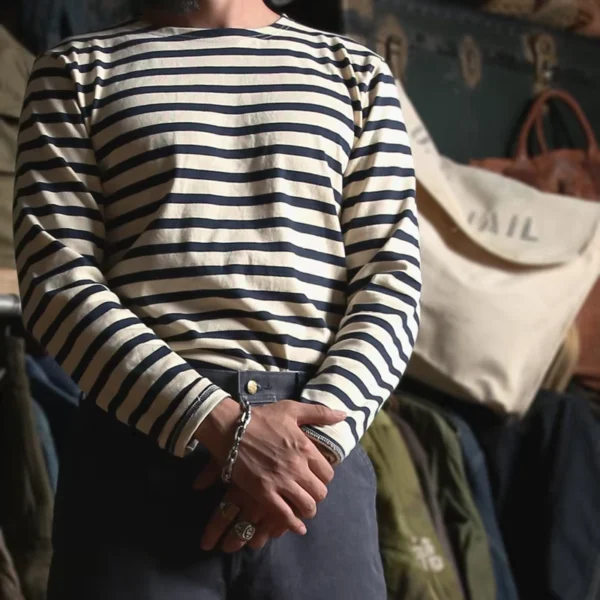
1. A cotton tee (white, plus one dark)
The base layer for almost everything. Choose mid-weight cotton - not so thin it feels fragile, not so heavy it traps heat. A clean shoulder line and a crew or soft V-neck both work.
- Alone with trousers or shorts
- Under an open linen shirt or light jacket
- Tucked for a slightly neater outline
Two tees (white and black or navy) cover more laundry days than one.
2. A linen or cotton-linen shirt
Useful as a top, a light cover, or a half-tucked layer. Pure linen stays cooler; a blend is often softer and less wrinkled. Neutral colors (white, light blue, sand, khaki) mix furthest. Keep the cut easy - linen feels better with room to move.
- Open over a tee for weekend ease
- Buttoned and tucked for smarter casual days
- Over a tank or tee in air-conditioned rooms
3. Cotton or cotton-linen trousers
One reliable pair of trousers carries most of the week. Neutrals such as khaki, navy, charcoal, or black; a straight or soft taper; chino twill for structure or a blend for warmer days. Leave a little ease at the waist for sitting.
4. A dress (women) or shorts (men)
Women: a cotton or cotton-linen dress that works alone - A-line or column, knee-ish length, easy straps or sleeves. Add sandals, a light jacket, or a belt when you want shape.
Men: cotton or cotton-linen shorts for warm months - just above the knee, straight through the leg, khaki/navy/grey. Pair with a tee, linen shirt, or polo depending on the day.
5. A light cotton or cotton-linen jacket
One layer for spring, autumn, and cool indoor air: denim, work jacket, linen blazer, or cotton coach style. Navy, khaki, black, or olive. Cut roomy enough for a tee or shirt underneath.
How the pieces combine
Those five categories already cover many ordinary outfits: tee + trousers, tee + shorts, shirt + trousers, shirt + shorts, jacket + tee + trousers, jacket over a dress, and so on. You do not need twenty variants of each - you need pieces that talk to each other.
Keeping a smaller wardrobe working
- Buy fewer, check mixability. Ask whether a new piece works with at least two or three things you already own.
- Edit each season. Pass on what you do not wear.
- Care for what stays. Cooler washes and air drying help cotton and linen last - see the care guide.
- Prefer clarity over hype. Fiber and material details on the product page tell you what you are actually buying.
In short
A smaller wardrobe is less about owning little for its own sake, and more about owning pieces that earn their space. Cotton and linen basics - simple, comfortable, and easy to recombine - are a practical place to start.
At Linenroot, we focus on everyday women's and men's pieces in cotton, linen, and related plant fibers - the kind of clothes meant for regular rotation.
Fiber and material details are listed on each product page.
Related reading: Cotton vs Linen - Care Guide - Why They Soften With Wear